


Although it has existed for a long time in the history of commerce, the B2B (Business to Business) model transactions between businesses remains a crucial foundation of the global economy. From trading raw materials, machinery, and production services to modern technology solutions, B2B is not just a form of business but also the way companies collaborate for mutual growth. For Vietnamese businesses, especially SMEs (Small and Medium Enterprises) in Vietnam, many still do not fully understand what B2B is and how to leverage this model for business development.

B2B: A business-to-business transaction model, a global economic platform that facilitates collaborative development
What is B2B? Concept and Basic Definition
Definition of B2B
B2B stands for “Business to Business” (or “Business with Business”), referring to economic transactions, trading, and commercial activities conducted between businesses, rather than direct sales to individual consumers.
In the B2B model, products or services are not sold to retail customers (end users) but are supplied to other companies or economic organizations to serve:
- Their production activities
- The process of reselling to end customers
- Internal management activities of the organization
Illustrative example: An electronic components manufacturer sells chipsets to a mobile phone manufacturer. The phone company uses these chipsets to assemble phones and then sells them to consumers. The transaction between the components company and the phone manufacturer is B2B.
Core Characteristics of the B2B Model
B2B has distinct features compared to traditional retail models (B2C – Business to Consumer):
| Characteristic | Detailed Description |
| Transaction scale | Very high order value, large product quantities, often involving long-term contracts (from months to years) |
| Customer type | Businesses, organizations, companies. High specialization requirements and clear purchasing processes |
| Decision-making process | Complex, time-consuming, involving multiple departments (finance, technical, management) and influencers |
| Relationship | Strategic partnership, long-term, based on trust and legal commitments |
| Quality requirements | Very strict, requiring compliance with standards, inspection documents, and international/national certifications |
| Payment methods | Often flexible payment terms (prepaid, postpaid, installment) and legal commitments |
B2B: Strategic partnerships, stringent quality standards, flexible payment options
Popular B2B Business Models Today
The B2B sector is currently divided into 4 main business forms, depending on the roles and operating methods of the participants:
1. Seller-Centric Model
In this model, one business owns and controls the platform or infrastructure to supply products/services to third parties such as manufacturers, wholesalers, or retailers. Characteristics:
-
- The seller retains full control over product information, pricing, and transaction terms
- Customers are mainly buyers who follow the seller’s conditions
- Commonly used by companies with strong brands or exclusive products
Example: An industrial machinery manufacturer sells its machines directly to factories with fixed prices and terms.
2. Buyer-Centric Model
Conversely, the business acts as the proactive buyer and sets purchasing requirements. Suppliers access the buyer’s system to quote, bid, and supply products. Characteristics:
-
- The buyer holds decision-making power over standards, pricing, and contract terms
- Suppliers must adapt and compete to win orders
- Commonly used by large corporations or government organizations
Example: A large retail conglomerate announces bulk purchasing requirements, and suppliers must bid to win the tender.
3. Intermediary Model
This model acts like a broker, where a business stands in the middle and connects buyers and sellers through e-commerce platforms or trading platforms. Characteristics:
-
- The intermediary does not own the products but only connects parties
- Earns profit through commissions or service fees
- Optimizes information and reduces customer search costs
Example: B2B e-commerce platforms like Alibaba, Gmajor help connect manufacturers with importers worldwide.
4. Collaborative Commerce Model
This is a form where multiple businesses jointly own and manage a shared trading platform, often in the form of trade communities, electronic marketplaces, or exchange hubs. Characteristics:
-
- Members collaborate to create shared value
- Helps small businesses access broader markets
- Creates collective strength for negotiating with large partners
Example: Industry associations collaborate to establish trade communities to promote common products and services.
B2B – B2C – C2C
Key Differences in B2B Transactions Compared to B2C
Comparison Table Between B2B and B2C
| Criterion | B2B (Business to Business) | B2C (Business to Consumer) |
| Customer type | Businesses, organizations, companies | Individuals, consumers |
| Order value | Very high, often from millions to billions of VND | Low to medium, often from thousands to millions or tens of millions |
| Number of customers | Few but high value and quality | Many but low individual value |
| Sales cycle | Long (from weeks to months or years) | Short (from minutes to days) |
| Purchase decision | Complex, involving multiple departments, careful calculation | Simple, based on personal preferences and needs |
| Relationship | Long-term, based on tight contracts | Short-term, one-time transactions |
| Quality requirements | Very strict, compliance with standards of both parties, state, clear processes | Normal, depending on requirements |
| Payment methods | Credit limits, prepaid/postpaid, L/C | Cash or bank transfer |
| Marketing approach | Content marketing, email, B2B platforms | Social media, advertising, promotions |
The Important Role of B2B in the Global Economy
Economic Importance
B2B plays a key role in the global economy:
- Creating Stability for the Global Supply Chain B2B transactions are the foundation of the global supply chain. Without B2B, manufacturing businesses cannot obtain raw materials, components, or services to continue production.
- Promoting Innovation and Technology Development B2B businesses often share knowledge, experience, and technology to jointly develop new products and create solutions that meet market needs.
- Significant Contribution to GDP and Job Creation The B2B sector creates millions of jobs in production, management, logistics, marketing, and human resources.
- Connecting International Economies Through B2B transactions, businesses from different countries connect, creating the foundation for international trade.

B2B is a crucial link in the global economy
Long-Term Customer Relationships: The Key to Success in B2B
Why are Long-Term Relationships Important?
Unlike B2C where customers may buy once and never return, in B2B, long-term customer relationships are vital:
1. Revenue Stability Once a B2B customer relationship is established, revenue becomes more predictable because:
Customers often have recurring purchase needs (monthly, quarterly, yearly)
Contract values are usually large, providing stable cash flow
2. Reduced Marketing and Sales Costs Focus on retaining loyal customers rather than acquiring new ones:
Cost of managing existing customer accounts is lower than acquiring new ones
Familiar customers are easier to sell to
3. Building Brand and Credibility Long-term customers become brand advocates:
They refer you to other potential partners
They trust your products/services and are willing to expand cooperation
4. Opportunities for Cross-selling and Upselling With existing customers, you have opportunities to:
Sell additional products/services
Upgrade contracts with premium solutions
Strategies for Building Long-Term Customer Relationships
To effectively build long-term customer relationships in B2B, businesses need:
| Strategy | Implementation Method |
| Understand Customer Needs | Conduct periodic surveys and interviews to understand changing needs. Use tools like HubSpot to track customer behavior. Build networks, share insights, and interact with industry leaders. LinkedIn accounts for 80% of B2B leads from social. |
| Provide Customized Solutions | Customize products/services to fit each customer’s specific needs |
| Maintain Regular Contact | Through email, calls, or periodic meetings to stay connected |
| Provide Priority Support | Have a dedicated customer support team ready to resolve issues quickly |
| Build Added Value | Create high-value content like whitepapers, ebooks, blogs, webinars to educate customers, build credibility, and attract leads. Collaborate with industry influencers (e.g., experts on LinkedIn) to increase credibility |
| Enhance Transparency | Clearly share progress, quality, and any issues. Emphasize sustainable value to attract businesses |

Building strong customer relationships is crucial in B2B business
Standard B2B Operating Process (7 Steps)
To operate effectively, most B2B businesses follow this standard process:
Step 1: Market Research and Target Identification
- Identify the industry’s strengths or the business’s current sector
- Understand needs, trends, and market opportunities
- Analyze competitors
Step 2: Build Potential Customer Database
- Create a list of suitable companies/organizations
- Collect contact information, company details (size, sector, positions of chairman, CFO, etc.)
- Classify customers by potential level
Step 3: Initial Approach and Relationship Building
- Contact via email, phone, or industry events
- Introduce the company, products/services
- Affirm the value you can bring
- Commit to long-term and sustainable partnership
Step 4: Solution Negotiation
- Discuss customer needs in detail
- Propose suitable solutions or products
- Clarify additional questions and concerns
Step 5: Contract Signing
- Agree on terms regarding price, duration, payment conditions
- Build a tight contract with legal elements
- Confirm commitments from both sides
Step 6: Supply and Delivery
- Deliver goods or implement services as committed
- Ensure quality meets standards
- Provide necessary instructions, certificates
Step 7: After-Sales Maintenance and Relationship Nurturing
- Monitor customer satisfaction
- Provide ongoing technical support and consulting
- Seek new cooperation opportunities and expansion

B2B connects businesses to expand the supply chain
Modern Online Marketing Strategies in B2B
To successfully operate B2B, businesses need to apply effective online marketing strategies:
1. Content Marketing Create high-value content such as:
Industry trend blog posts
White papers providing in-depth information
Case studies showing success of previous customers
Product usage tutorial videos
2. SEO and Search
SEO increases visibility and ranking on Google, focusing on long-tail keywords related to business customer problems
Optimize website for high Google ranking
Use industry-related keywords
Build backlinks from reputable websites
3. Email Marketing
Build potential customer email lists
Send new product notifications, special offers
Automate email marketing campaigns
Use tools like Mailchimp or Marketo to segment lists based on behavior. Combine with content to guide from awareness to decision stage.
4. Social Networks (LinkedIn, Twitter, Facebook)
Share industry news, professional tips
Build expert communities
Interact with customers and partners
5. B2B E-Commerce Platforms
Register on reputable B2B platforms (Alibaba, Global Sources, Gmajor)
Create professional company profiles with high-quality product photos
Participate in online trade fairs and exhibitions
B2B marketing helps to find potential customers selectively
Benefits and Challenges in the B2B Sector
Main Benefits
| Benefit | Explanation |
| High and Sustainable Revenue | Large order values + long-term contracts = stable cash flow |
| High Profit Margins | Higher margins than B2C due to large order volumes |
| Strong Relationships | Long-term customers become strategic partners, reducing risks |
| High Safety | Tight contracts, clear legal documents reduce risks |
| Good Conversion Rates | B2B customers have clear purchase purposes, easier to close deals |
| Expansion Opportunities | Upsell and cross-sell to existing customers |
Main Challenges
| Challenge | Solution |
| Long Sales Cycle | Need patience, dedicated account management, long-term nurturing |
| Fierce Competition | Continuously innovate products, improve services, build strong brand |
| Concentration Risk | Losing a major customer impacts overall revenue; need diversification |
| High Quality Requirements | Comply with international standards, certifications, legal documents |
| Cash Flow Management | Long capital recovery time (30-90 days); need good financial management |
| Difficult Demand Forecasting | Market changes quickly; need continuous strategy adjustment |
B2B also comes with many risks if businesses fail to meet customer requirements
B2B in Vietnam: Opportunities and Challenges for Foreign Businesses
Great Opportunities for Foreign Businesses
From an international perspective, the Vietnamese market offers many attractive advantages:
1. Access to a High-Potential Market
Vietnam is one of the fastest-growing economies in the region, with high import demand from domestic businesses.
Global B2B platforms help foreign businesses easily connect with thousands of Vietnamese partners (manufacturers, distributors, retailers).
2. Competitive Pricing and High Demand
Vietnamese businesses are willing to partner with foreign suppliers to improve product quality, especially in textiles, electronics, and processed agricultural products.
Vietnamese B2B customers prioritize competitive pricing with stable quality and on-time delivery.
3. Advantages from Free Trade Agreements (FTAs)
EVFTA, CPTPP, RCEP, UKVFTA… significantly reduce import tariffs for goods from EU, US, Japan, Korea, Australia.
Foreign businesses can leverage tariff preferences to compete better.
4. Government Support and Local Partners
Programs to attract FDI, modern industrial zones, and policies supporting foreign businesses.
Opportunities to partner with local entities to reduce risks and accelerate market penetration.
Key Challenges to Note
1. Lack of Understanding of Market and Business Culture
Many foreign businesses do not fully understand legal regulations, negotiation styles, and long-term relationships in Vietnamese business.
2. Language and Communication Barriers
English is not the main communication language in many Vietnamese businesses.
Need teams familiar with the culture to understand detailed requirements and build trust.
3. High Logistics and Transportation Costs
International shipping to Vietnam is expensive; need to optimize the supply chain.
Complex customs procedures, cargo insurance, and import/export documents.
4. Complex Legal and Customs Procedures
Must strictly comply with import regulations, taxes, e-invoices, certificates of origin (C/O).
International contracts, L/C payments, UCP 600 require deep knowledge.
5. High Competition from Local and Regional Suppliers
Vietnamese and Chinese businesses often have advantages in low costs and fast delivery.
Need differentiation strategies in quality, technology, or after-sales service.
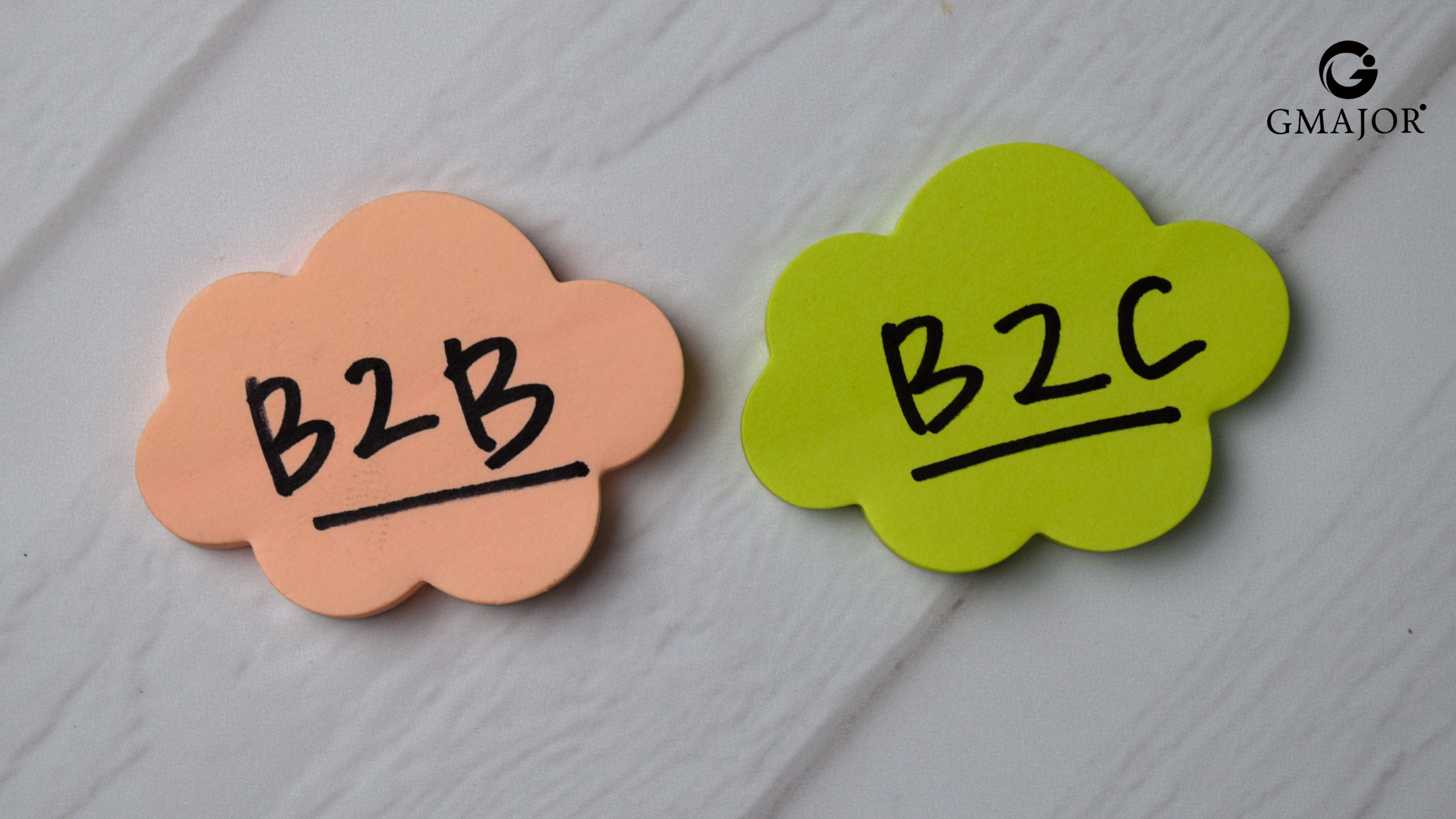
B2B businesses also need to pay attention to legal factors related to the industry they are operating in
Contact Gmajor for Effective B2B Operations
Gmajor provides comprehensive B2B solutions to help Vietnamese SMEs overcome the above challenges and connect with reputable international partners.
Gmajor offers comprehensive accompanying service packages:
- Operating personnel: Professional support + 3 potential partners/month
- Negotiation commitment: 6 partners + 3 negotiations/month
- Internal training: Comprehensive from finding partners to staff training
- Advertising package: Increase global visibility on the Gmajor platform
20% discount offer – Contact today!
📞 Hotline: 036 300 3831
📧 Email: support@gmajor.biz
🔗 Connect With GMAJOR: