In recent years, the term M&A has appeared more frequently in financial news and business forums in Vietnam. From multi-hundred-million-dollar deals by large corporations to smaller transactions among small and medium-sized enterprises (SMEs), M&A has become a key topic.
What exactly is M&A? What does M&A mean? And what do small and medium-sized enterprises need to prepare to participate proactively and safely in this arena? The article below provides all the foundational knowledge you need.

What is M&A?
What Is M&A? Distinguishing Between Merger and Acquisition
M&A stands for Mergers and Acquisitions, two distinct business activities in legal nature but often mentioned together because they both aim to restructure ownership and control of enterprises.
A merger (Mergers) is the process where two or more companies combine to form a new entity. The merged company transfers all assets, rights, and obligations to the receiving company and ceases to exist as an independent legal entity.
An acquisition (Acquisitions) is when one company takes over all or part of the shares or assets of another company to gain control. The key difference: the acquired company retains its legal personality and often becomes a subsidiary in the new structure.
In terms of objectives, both forms aim for synergy, the value of the combined entity must exceed the sum of the two separate entities.
Common M&A Forms Businesses Should Know
Depending on strategic goals, M&A is executed in various forms:
- Horizontal M&A occurs between competitors in the same industry to expand market share and reduce competitive pressure. This is the most common form in retail, banking, and food & beverage sectors.
- Vertical M&A takes place between companies in the same supply chain but at different stages. The goal is self-sufficiency, quality control, and reduced intermediary costs.
- Conglomerate M&A reduces risk by diversifying across unrelated industries.
- Restructuring M&A involves acquiring distressed companies to reorganize and unlock potential.
- Leveraged Buyout (LBO) uses the target company’s assets as collateral for financing the deal.
The M&A Process: From Strategy to Integration
A standard M&A transaction typically takes an average of 2.1 years and involves multiple stages requiring close coordination among financial, legal, and strategic advisors. The table below summarizes the basic M&A process for easy reference.
| Stage | Key Activities | Key Risks to Control |
| 1. Define objectives & strategy | Set growth direction, identify suitable targets | Choosing misaligned targets with long-term strategy |
| 2. Preliminary assessment | Initial review of financials, legal, and assets | Incomplete information leading to inaccurate evaluation |
| 3. In-depth due diligence | Comprehensive analysis of finance, tax, legal, HR, ESG | Overlooking hidden liabilities or legal risks |
| 4. Valuation & negotiation | Determine deal value and agree on terms | Misvaluation causing buyer overpayment |
| 5. Transaction closing | Complete legal and financial obligations | Contract terms failing to fully protect parties |
| 6. Post-M&A integration | Merge personnel, culture, operational systems | Cultural conflicts and loss of key talent |
M&A due diligence process
M&A Valuation: Methods to Determine Deal Value
M&A valuation is the decisive step directly affecting the fairness and success of the entire transaction. Experts typically combine multiple methods for a comprehensive view.
- Enterprise Value (EV) is the most accurate indicator reflecting the total real value of the business regardless of capital structure.
- Discounted Cash Flow (DCF) determines present value based on projected future free cash flows, suitable for stable-growth companies with predictable cash flows.
- Price-to-Earnings (P/E) ratio compares market value to after-tax profit, commonly used for quick comparisons within the same industry.
- EV/Sales ratio is especially useful for companies without profit but with strong revenue growth, typical of tech startups.
- Net Asset Value (NAV) calculates the total real asset value of the business, often applied in real estate or asset-heavy deals.
See also: GMAJOR’s M&A valuation tools
Benefits & Risks of Mergers and Acquisitions
Benefits
- Immediate market share and customer base expansion
- Access to new technology and intangible assets
- Operational cost optimization through shared resources
- Product diversification without building from scratch
- Long-term shareholder value increase through synergy effects
Risks
- High execution costs: consulting, legal, restructuring
- Post-merger cultural conflicts
- Misvaluation leading to buyer financial losses
- Loss of control as organization size increases dramatically
- Loss of intangible assets like brand and customer relationships
Legal Framework Governing M&A in Vietnam
In Vietnam, mergers and acquisitions are regulated by several key laws: the Law on Enterprises 2020 and the Law on Investment 2020 serve as the core foundation. The Competition Law 2018 controls economic concentration cases that may negatively affect the market. The Securities Law 2019 regulates transactions involving public companies. For foreign-involved deals, new-generation free trade agreements such as CPTPP and EVFTA introduce preferential provisions while imposing specific compliance requirements.
After transaction completion, businesses typically must adjust business licenses, including name changes, additional business lines, shareholder updates, and charter capital adjustments.
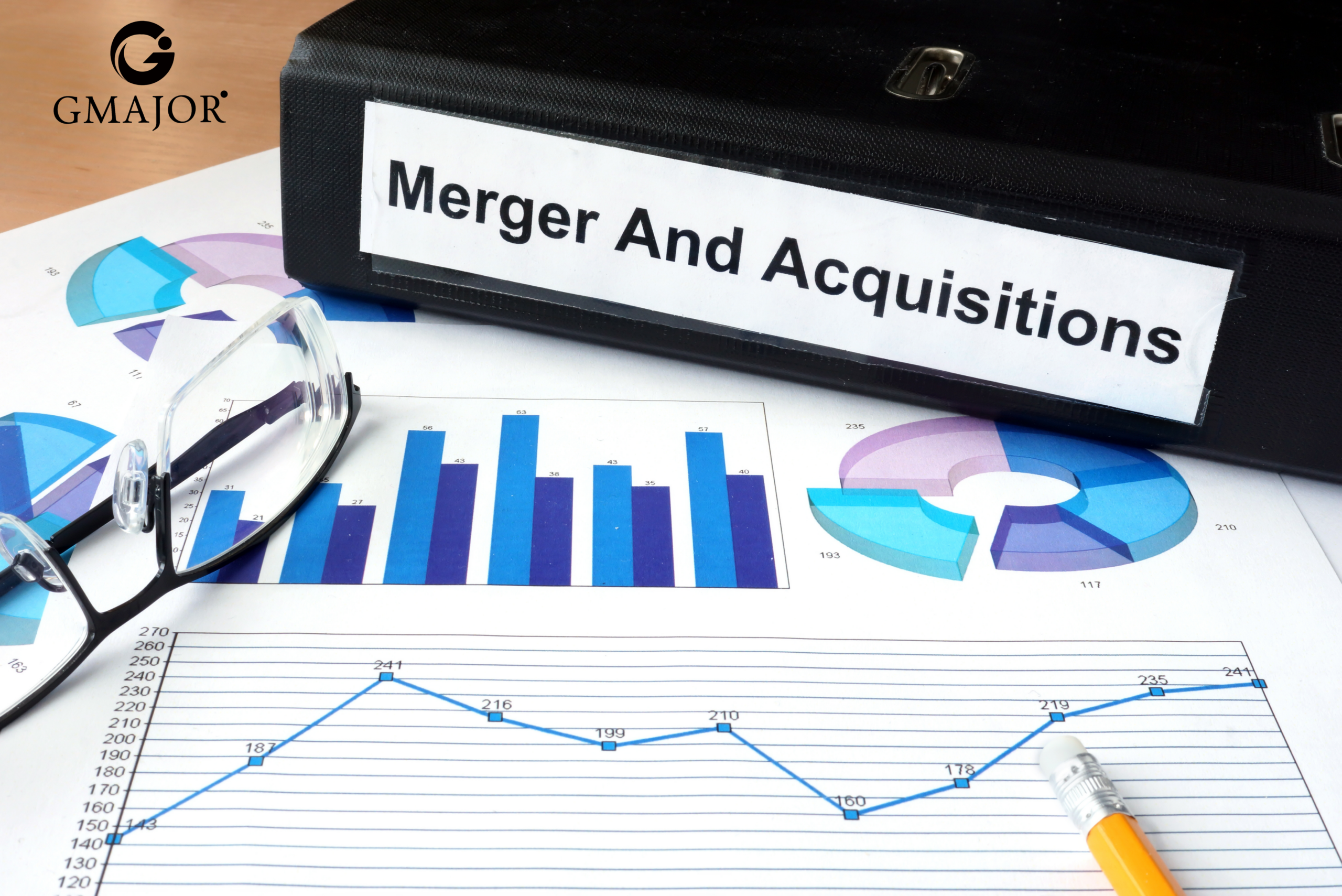
M&A and the legal framework in Vietnam
M&A in Vietnam: Opportunities & Challenges for Foreign Businesses
Globally, the M&A market reached approximately 3.5 trillion USD in 2024, with strong growth in technology, renewable energy, and healthcare. In Vietnam, FDI inflows continue surging through M&A deals in real estate, manufacturing, finance, and e-commerce, reflecting the market’s increasing attractiveness to foreign investors.
For foreign businesses, M&A in Vietnam offers two clear directions:
- As buyers: Acquiring Vietnamese companies to quickly access local distribution networks, raw material sources, competitive labor, and domestic market knowledge without starting from scratch.
- As sellers (strategic divestment): Partnering with Vietnamese entities to transfer technology, scale up, and leverage FDI incentives and FTAs.
The biggest challenge for foreign businesses is not capital but preparation capability: transparent financial systems per international standards (IFRS), complete legal documentation, convincing valuation and value presentation, and overcoming cultural, legal, and administrative barriers in Vietnam.
Accurate & Free M&A Valuation Tool for Businesses
Are you considering transferring, buying, selling, or merging your business? GMAJOR offers an in-depth M&A valuation tool to help Vietnamese businesses and foreign investors accurately assess the real market value of their enterprise.
GMAJOR’s M&A valuation tool helps you:
- Determine enterprise value using professional valuation methods (DCF, Comparable Company, Asset-based, Market Approach).
- Get quick, accurate valuations completely free of charge (100% no fees for enterprise value estimation).
- Receive detailed, transparent, and easy-to-understand valuation reports to convince buyers, sellers, or investors.
- Enjoy absolute information security – enterprise data is strictly protected according to international standards.
Whether you are a Vietnamese business looking to divest or a foreign enterprise seeking M&A opportunities in Vietnam, GMAJOR’s valuation tool helps shorten time, reduce risks, and increase the success rate of your deal.
GMAJOR is currently offering a 20% discount for new businesses.
📞 Contact GMAJOR now: Hotline 036 300 3831 | Email support@gmajor.biz
🔗 Connect With GMAJOR: