Import-Export Customs Procedures: Process, Documentation, and Practical Experience for SMEs
In international trade, customs clearance is a mandatory step for goods to be legally imported or exported. For SMEs, this is often the stage where risks are most likely to arise: incorrect HS Code classification, document discrepancies, or incomplete declarations can lead to cargo hold-ups, unforeseen storage fees, and disrupted delivery schedules.
This article provides a practical guide to help businesses:
- Master the standard customs clearance process for 2026.
- Prepare accurate and sufficient documentation.
- Minimize the risk of Yellow and Red Channel inspections.
- Optimize clearance time and costs.
What are Customs Procedures and Why are They Mandatory?
Definition of Customs Procedures in Import-Export Activities
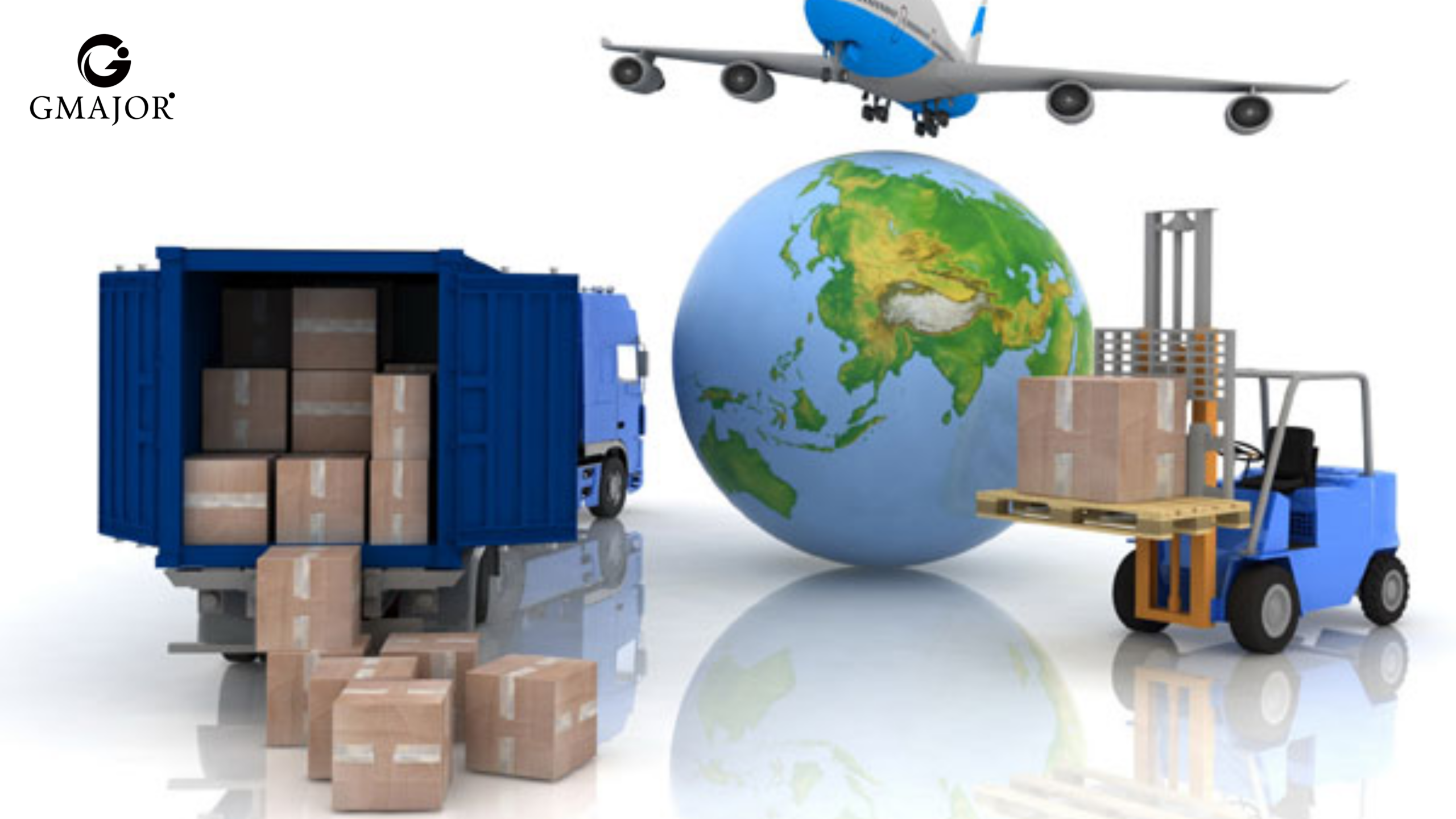
Customs procedures are the sequence of steps that customs declarants and customs authorities must perform regarding goods and means of transport in accordance with the law. The objective is to monitor the movement of goods across borders, ensuring compliance with regulatory policies and tax obligations.
Key Roles (Why it is Mandatory):
- Ensuring Legal Compliance: Verifying that the goods entering or leaving a country meet all legal requirements and safety standards.
- Tax & Trade Policy Application: Ensuring that import/export duties, VAT, and anti-dumping taxes are calculated correctly according to national trade policies.
- Preventing Prohibited & Counterfeit Goods: Acting as a barrier against contraband, hazardous materials, and intellectual property violations.
- National Trade Data Collection: Recording statistics to help the government analyze economic trends and trade balances.
These procedures are carried out by cargo owners (importers/exporters), customs brokers, or authorized entities.
When are Customs Procedures Required?
SMEs should pay close attention to the following mandatory cases:
- Commercial Import/Export Goods: Standard goods under international sales and purchase contracts.
- Processing and Temporary Import – Re-export: Inward/Outward Processing: Goods brought into Vietnam for production and then exported.
- Temporary Import – Re-export: Goods brought in for exhibitions or trade fairs and then returned to the country of origin.
- Samples and Non-commercial Goods: Gifts, donations, or samples not intended for sale. These must still be declared for quota control and regulatory oversight.
Risks of Improper Customs Procedures
Without sufficient experience in customs clearance, businesses can easily fall into “risk traps”:
- Delayed Clearance: This directly impacts delivery schedules, leading to a loss of business reputation and potential contract penalties.
- Escalating Costs: Storage fees, such as Demurrage (DEM) and Detention (DET) at the port, can quickly erode the entire profit margin of a shipment.
- Administrative Penalties: Errors in HS Code classification or under-declaring invoice values can result in fines ranging from 10% to 200% of the tax shortfall.
Import-Export in Vietnam
Customs Documentation and Required Records
In 2026, despite the dominance of digitalization, maintaining consistency between physical records (for archiving) and electronic data remains a top priority.
Mandatory Customs Documentation List
Customs Declaration: Submitted via the electronic system, providing a comprehensive overview of the shipment’s details.
Sales Contract / Foreign Trade Contract: The legal framework and primary basis for the transaction.
Commercial Invoice: Specifies the transaction value, serving as the foundation for tax assessment.
Packing List: Provides detailed information on packaging specifications, number of units, and weight.
Bill of Lading (B/L): The official transport document and evidence of the right to receive goods.
Supplementary Documents (Subject to Commodity Type)
Certificate of Origin (C/O): Used to claim preferential tax rates under various Free Trade Agreements (FTAs).
Specialized Licenses: Required for specific categories such as foodstuffs, medical devices, chemicals, and specialized equipment.
Quarantine & Quality Inspection Certificates: Issued in compliance with industry-specific regulatory requirements (e.g., Phytosanitary or Sanitary certificates).
Standard Import-Export Customs Procedures 2026
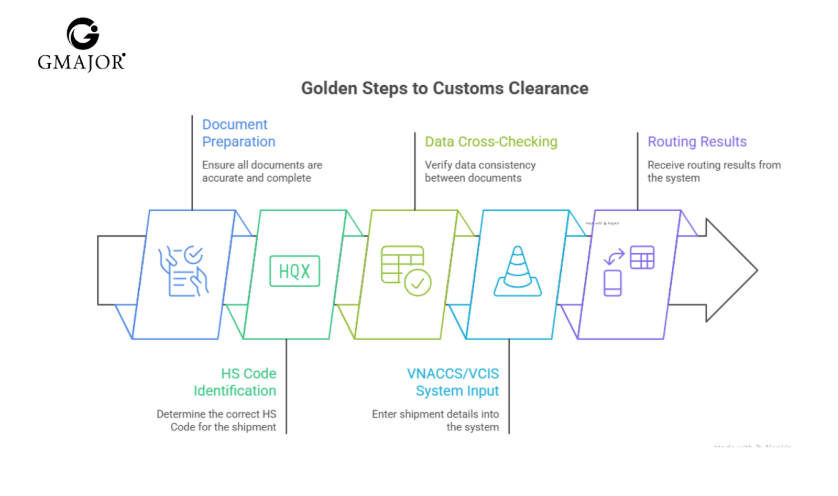
Below are the 5 “Golden Steps” to help SMEs navigate the customs clearance process professionally.
Step 1: Document Preparation and HS Code Identification
This is the most critical phase. You must cross-check all data on the Commercial Invoice and Packing List to ensure they match perfectly, down to the last decimal. Most importantly, identifying the correct HS Code will determine the specific tax rate applied to your shipment.
Pro Tip: Always refer to the latest 2026 Tariff Schedule to avoid incorrect coding, which could lead to the rejection of your declared customs value.
Step 2: Electronic Customs Declaration
Utilize the VNACCS/VCIS system. The declarant will input the shipment details into the software. Specific criteria such as the type code (e.g., E21, A11, B11…), port code, and cargo identifier must be entered with absolute precision.
Step 3: Declaration Routing (Channeling)
Once the declaration is submitted, the system will return the routing results:
- Green Lane: Congratulations! Your shipment is cleared immediately (upon tax payment).
- Yellow Lane: Customs authorities will conduct a detailed review of your physical or electronic document set.
- Red Lane: The highest level of inspection; customs will perform a physical examination of the goods at the port or warehouse.
Step 4: Document Review and Physical Inspection (if applicable)
If your shipment is assigned to the Red Lane, you must arrange for personnel and resources to open the container for inspection by customs officers. Ensure that the actual goods including specifications, labeling, and quantity match the information declared on the customs form exactly.
Step 5: Tax Payment and Customs Clearance
Once the documents are approved, the business must pay import/export duties and VAT through a linked 24/7 electronic banking system. When the status is updated to “Cleared”, you are officially authorized to transport the goods to your warehouse.
GMAJOR – Optimizing Customs Procedures for SMEs
In the digital era, SMEs no longer need to “struggle” through dozens of complex regulations on their own. A comprehensive support ecosystem was established as a comprehensive support ecosystem.
GMAJOR – Global B2B Marketplace Platform Connecting Businesses. GMAJOR provides an intelligent platform that helps businesses stay updated with the latest changes in the 2026 Customs Law. Instead of fragmented searches, SMEs can connect directly with a network of experts and verified, reputable customs brokers—minimizing risks for those crucial first shipments.
Optimizing Costs and Clearance Time
- Smart HS Code Lookup: GMAJOR’s database system integrates Artificial Intelligence to suggest accurate HS codes based on your specific product descriptions.
- Supporting International Integration: Particularly strong on the Vietnam – Japan route, GMAJOR streamlines complex documentation, empowering businesses to confidently expand into global markets.
👉 Start optimizing your customs process today with GMAJOR – the B2B platform supporting SMEs through data, partnerships, and end-to-end import-export operations.
The Key to Efficient Customs Clearance in 2026
To conclude, let’s review the “vital” reminders for every SME’s import-export department:
Key Takeaways to Remember
- Consistency is King: There must be absolutely no discrepancies or contradictions between your various shipping documents.
- Leverage Technology: Move away from manual processing. Utilize software and digital platforms like Gmajor to optimize your operations.
- Risk Management: Always factor potential storage and demurrage fees into your budget for Red Lane scenarios to ensure your cash flow remains stable.
Expert Advice for Faster Clearance
- Learn from Experience: After every shipment, document any specific feedback or corrections requested by customs officials to ensure those errors are never repeated.
- Strict Legal Compliance: Never intentionally undervalue your goods to reduce taxes. A company’s reputation within the customs system (Priority Enterprise ranking) is an invaluable asset that paves the way for Green Lane priority in the future.
Customs procedures may seem daunting at first, but with meticulous preparation and the support of modern platforms, your business can fully master the import-export landscape in 2026.
If your company is preparing to expand its international trade operations this year, GMAJOR is the ideal starting point to standardize your customs procedures, mitigate risks, and accelerate clearance from day one.
👉 Contact us for a consultation today:
- 🌐 Website: https://www.gmajor.biz
- 📲 Hotline: 036 300 3831
- 📧 Email: support@gmajor.biz
🔗 Follow GMAJOR on our social platforms: